
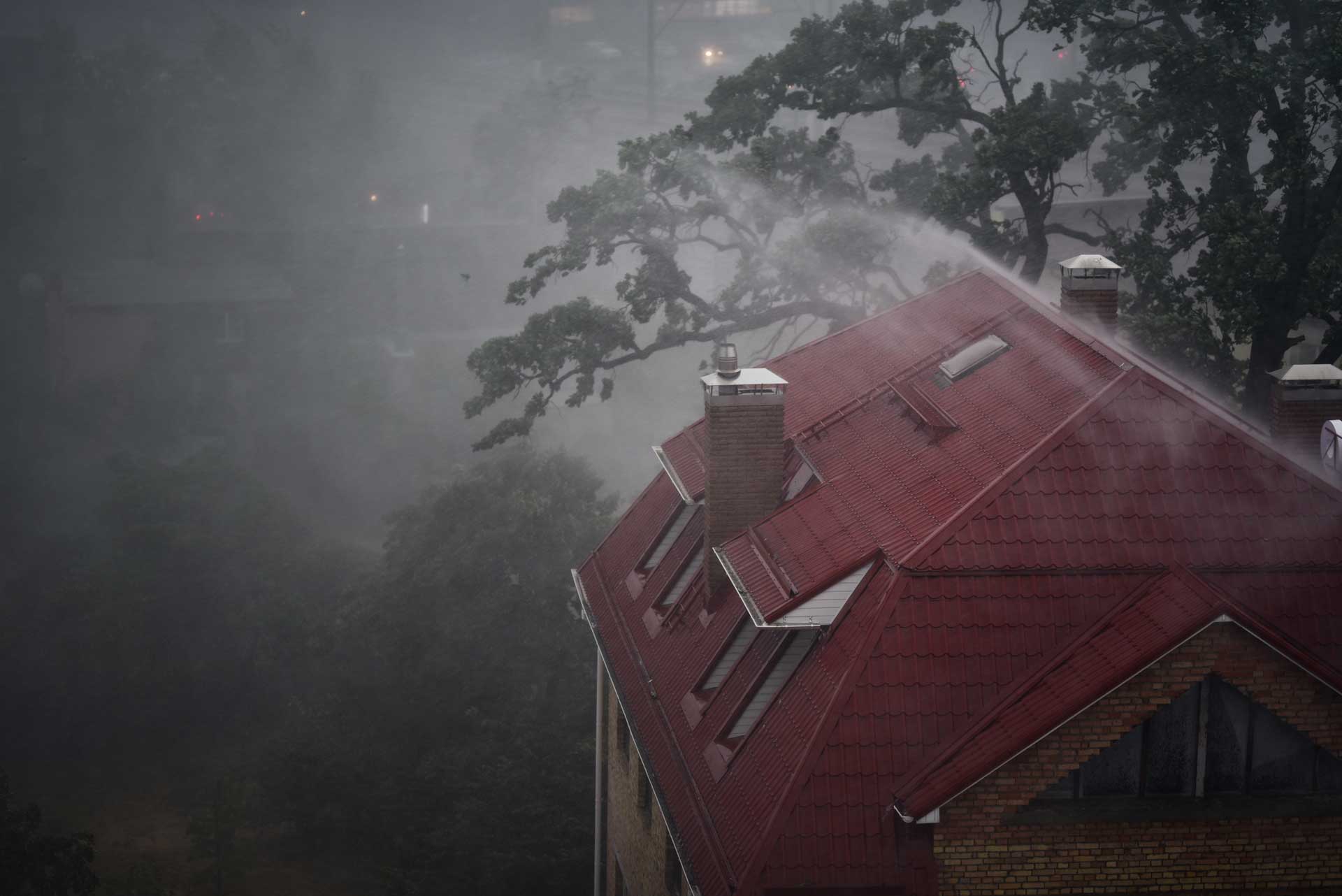
It’s a frustrating mystery many homeowners in Missouri face. You sit through a massive downpour with inches of rain falling straight down, and your ceiling stays perfectly dry. You breathe a sigh of relief, thinking your roof is in great shape and you won’t need to call for roof repair Stockton MO anytime soon. But then, a few weeks later, a smaller storm rolls through. It isn’t even raining that hard, but the wind is howling, and suddenly—drip, drip, drip.
Why does your roof leak during a windy light rain but stay bone-dry during a heavy vertical downpour? It feels like your house is playing tricks on you, but there is actually a very logical, scientific reason for it. It’s called “wind-driven rain,” and it searches for weaknesses in your home that gravity-fed rain never finds.
If you’re trying to solve this mystery, here’s everything you need to know about why your roof behaves this way and how to get it fixed.
Gravity vs. Wind for Roof Repair Stockton MO
Most roofs are designed to handle gravity. Shingles are overlapped like scales on a fish so that when water falls from the sky, it hits a shingle and slides down to the next one, eventually reaching the gutters. As long as water is moving downward, the system works beautifully.
Wind-driven rain behaves a bit differently. When high winds hit your house, they can push water sideways or even upward. Instead of sliding over the shingles, the water is forced under them or into tiny gaps around your vents and chimneys.
If you’ve been searching for roof repair Stockton MO, you’re likely dealing with a spot that is protected from vertical rain but wide open to a sideways blast.
The Most Common Culprits
When water is being shoved around by 40-mile-per-hour gusts, it finds its way into places it shouldn’t be. These are the usual suspects.
1. Roof Flashing Issues
Flashing is the thin metal material installed around “interruptions” in your roof—things like chimneys, skylights, and where a dormer meets the main roof line. Flashing is your roof’s second line of defense.
In a normal rain, the water just hits the flashing and runs off. But wind can get underneath the metal “lip” of the flashing. If the sealant has dried out or cracked over the years, wind-driven rain will find that crack and push water right behind the metal and into your attic.
This is a common reason people look for affordable roof repair services near Stockton MO, as fixing flashing is often a simple job if caught early.
2. Shingle “Blow-Up”
Shingles are heavy, and they are usually sealed down with a strip of roofing cement. However, over time, that seal can weaken. When the wind catches the edge of a shingle just right, it can lift it up like the lid of a box. While the shingle is lifted, the rain is forced underneath it. Once the wind stops, the shingle lays back down, and the roof looks perfectly fine from the ground. This “ghost leak” is one of the hardest for homeowners to spot without getting up on a ladder.
3. Attic Vents and Ridge Vents
Your roof needs to breathe to stay healthy, which is why you have vents. Some are mushroom-shaped caps, and others are long vents that run along the peak of your roof (ridge vents). These are designed to let air out while keeping vertical rain from falling in.
However, they aren’t always hurricane-proof. A strong, horizontal wind can blow rain directly into the side of the vent. Once the water gets inside the vent’s “throat,” it drops straight onto your attic floor or your insulation.
4. Siding and Window Interfaces
Sometimes, a roof leak isn’t really a roof leak at all. In wind-driven rain, water is blasted against the side of your house. If there is a gap in the caulking around a window or where the siding meets the roofline, water can get behind the siding. It then travels down the wall studs and drips onto your ceiling, making it look like the roof is the problem.
Why You Shouldn’t Ignore a “Sometimes” Leak
It’s very tempting to ignore a leak that only happens twice a year during a bad windstorm. You might think, “If it only drips a little bit every six months, it’s not a big deal.”
Unfortunately, water damage is cumulative. Even if you don’t see a puddle on the floor, that moisture is soaking into your wooden rafters and your insulation. Over time, this leads to:
- Mold and Mildew: Mold loves dark, damp attics. Once it starts, it can spread quickly and affect the air quality of your entire home.
- Structural Rot: Wood that gets wet and stays wet eventually goes soft. Replacing a few shingles is cheap; replacing a rotted roof deck is not.
- Higher Energy Bills: When attic insulation gets wet, it loses its ability to keep your house warm or cool. It clumps up and becomes useless.
How to Find the Source
If you want to find local roof repair services in Stockton Missouri, it helps to have as much information as possible for the technician.
Next time it leaks, try to note the direction the wind is blowing. Is the leak only happening when the wind comes from the North? This tells the roofing professional exactly which side of the chimney or which section of siding to inspect. You can also go into your attic with a flashlight during a storm (be very careful where you step!) and look for “tracking”—the shiny trail water leaves as it runs down a board.
How to Find Quality Professional Help
Roofing issues can be tricky because the spot where the water drips from your ceiling is rarely the spot where the water is coming through the roof. Water is very sneaky; it will enter at the chimney, run six feet down a rafter, and then drip onto your bedroom floor.
Because these leaks are so specific to wind conditions, they require a keen eye to diagnose. When you are looking for the best roofing companies for roof repair in Stockton MO, make sure to mention that the leak only happens during wind-driven rain. A qualified professional will know exactly what that means and will check your flashing, vents, and shingle seals rather than just looking for a hole in the roof.
Don’t Wait For The Next Windstorm
A roof that only leaks when the wind blows isn’t a “small” problem, it’s just a specific one. It means your home’s “armor” is mostly intact but has a few gaps that the wind is taking advantage of. By addressing these gaps now, you can prevent expensive structural damage and keep your home dry, no matter which way the wind blows.