
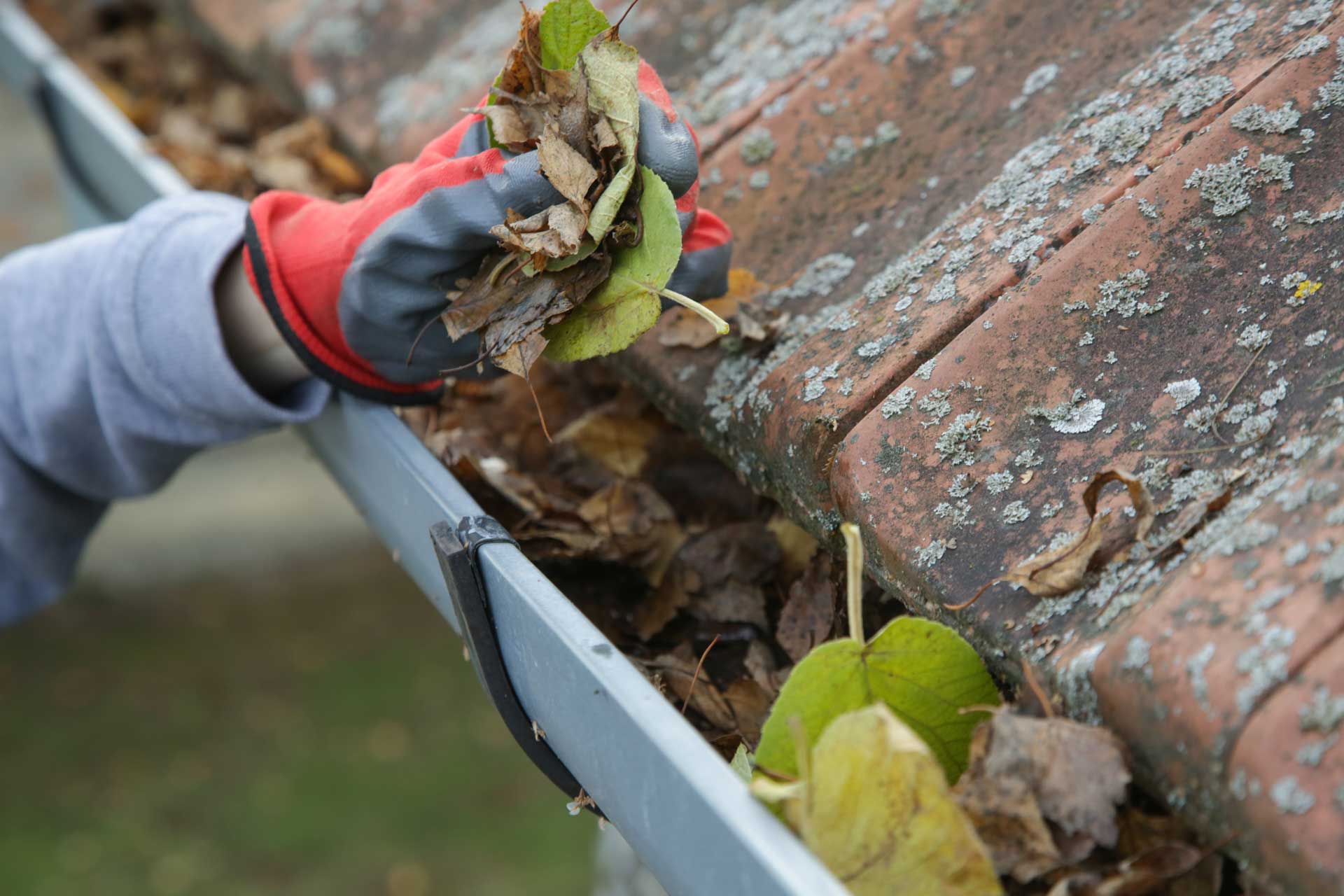
If you have ever searched “gutter cleaning service near me” right after watching water pour over the edge of your gutters, you’re not alone. Overflow doesn’t always mean your gutters are packed with leaves. Sometimes the gutter is technically clean, but the system still can’t move water fast enough. When that happens, the overflow usually comes down to three practical issues: the pitch of the gutter, the outlet size, and downspout bottlenecks.
The good news is that most of these problems are fixable once you know what you are looking for. We’ll break down what you need to know so you can diagnose what’s happening and decide what to do next.
How Gutters Are Supposed To Work During Heavy Rain
A gutter system is basically a long, shallow channel. Rain hits your roof, runs to the edge, drops into the gutter, and then travels to an outlet that feeds a downspout. The downspout carries the water down and away from your home.
That sounds quite simple, but it only works when the flow is smooth and continuous. In a real storm, water can be moving fast, and roofs can dump a surprising amount of volume in a short time. If the gutter can’t carry that volume to the downspout quickly enough, it will spill over the front or back edge.
This is why overflow is often a system design or installation issue, not just a cleaning issue.
Pitch Problems: When The Gutter Looks Fine But Water Cannot Flow
Gutters aren’t meant to be perfectly level. They need a slight slope so water naturally travels toward the downspout. If the pitch is too flat, water slows down, pools, and builds up until it spills over. If the pitch is too steep, water can rush past the outlet area, overshoot in certain conditions, or create a spot where debris collects.
Here are a few common pitch-related red flags:
- Standing water in the gutter hours after rain ends
- Overflow near the middle of a long run, especially during downpours
- Dripping or staining in a consistent spot even when the gutter is clean
- Sections that look wavy or sagging when viewed from the ground
Pitch issues can also show up after a winter of freeze and thaw, or when fasteners loosen and the gutter line subtly changes. A gutter can look clean and intact but still be off by just enough to cause problems.
A quick homeowner check: if you can safely see into the gutter, look for water marks that show it’s not draining completely. If the gutter dries with a “tide line” in one section, that’s a clue that water sits there.
Outlet Size Matters More Than Most People Think
The outlet is the opening where the gutter feeds into the downspout. If the outlet is too small for the roof area it’s serving, the gutter can fill faster than the outlet can drain it. It’s like trying to empty a bathtub through a tiny straw.
This can happen even on newer homes, especially if the gutter was installed with standard parts that don’t match the roof volume. It can also happen when one downspout is doing the work that should be shared by two.
You might notice this as:
- Overflow that happens right before the downspout
- A gutter that looks like it’s “backing up” during heavy rain
- A waterfall effect at corners, even though the trough is clean
If you have a large roof plane feeding into one gutter run, outlet sizing becomes a big deal. Bigger roofs require more drainage capacity, and sometimes the fix isn’t cleaning. It’s adding an additional outlet and downspout, or upgrading components so the system can keep up.
Downspout Bottlenecks: The Most Common Reason For “Clean” Overflow
This is the one that surprises homeowners the most. The gutter can be clean, but the downspout can be partially clogged, crushed, poorly connected, or simply too small for the volume it’s receiving.
Here are common downspout bottlenecks that cause overflow:
Hidden Clogs In Elbows
Downspouts often clog in the elbows, especially the lower elbow near the ground. Small debris, shingle grit, and roof sediment collect there and create a slow drain. From the top, everything looks fine. During heavy rain, the elbow can’t pass water fast enough, so the gutter fills and spills.
Underground Drain Lines That Back Up
Some homes route downspouts into buried pipes. That can be great when it works, but if the underground line is blocked or collapsed, water has nowhere to go. The result looks like a gutter problem, but the real issue is below ground.
Crushed Or Poorly Sloped Extensions
If a downspout extension is smashed, kinked, or sloped back toward the house, it can cause a backup. This is common after lawn work, landscaping changes, or winter snow piles.
Too Few Downspouts For The Roof Area
If one downspout is serving a long run with a large roof plane, it can bottleneck even if it’s technically clear. In that case, the system is simply undersized.
If you are in this situation, you might search “gutter cleaning service near me” because overflow feels like a cleaning problem. But the real fix might be a proper gutter service inspection that checks drainage performance, not just debris removal.
Signs It’s Not Debris and It’s a System Issue
If you want a quick way to tell whether you’re dealing with clogging or design, look for patterns:
- Overflow happens only in heavy rain: often a capacity or pitch issue
- Overflow happens in the same spot every time: often pitch, sagging, or an outlet mismatch
- Overflow is worst near the downspout: often a downspout bottleneck
- Water spills behind the gutter: could be pitch, fascia issues, or drip edge alignment
Another clue is timing. If the gutter overflows immediately when rain starts, the system might be undersized or the roof runoff is overshooting the gutter. If it overflows after several minutes, the gutter is likely filling because it can’t drain fast enough.
What You Can Do Before You Call Anyone
You don’t need to climb a ladder to learn a lot. Here are simple, safe checks:
- Watch during a rainstorm for where overflow starts first.
- Check downspout discharge at ground level. If the flow is weak during heavy rain, you may have a bottleneck.
- Look for sagging sections along the gutter line from the yard or driveway.
- Check extensions and elbows for obvious crushing or disconnections.
If you do use a ladder, follow basic safety precautions and avoid working during wet or windy conditions. Many homeowners decide a “gutter cleaning service near me” is worth it simply because ladders and second stories don’t mix well.
When A Gutter Service Inspection Is Worth It
A good gutter service visit should look at more than leaves. The most useful inspection checks pitch, fastening, outlet sizing, downspout performance, and drainage away from the foundation. That’s especially important if you have cleaned the gutters and the overflow keeps happening.
If you’re repeatedly dealing with overflow, the long-term fix is usually one of these:
- Correcting the pitch and re-hanging sections
- Adding an additional downspout or outlet
- Clearing or repairing downspout elbows or underground lines
- Upgrading gutter size where the roof volume demands it
And if you’re tired of guessing after every storm, searching “gutter cleaning service near me” can be the first step, but the real answer is making sure the entire system is designed to move water efficiently.
Clean Gutters Are Only The Start: Fix The Flow, Not Just The Debris
Clean gutters are important, but they are only one piece of the puzzle. Pitch problems, undersized outlets, and downspout bottlenecks can all cause overflow even when there’s no visible debris.
Once you know what to look for, the problem becomes much easier to diagnose. And whether you handle it yourself or call a gutter service professional, the goal is the same: move water off the roof, through the system, and away from your home without drama every time it rains.